














Description
Historical and mechanical context
In the late 1930s, Omega sought more than just modest wrist‑chronographs; they pursued a movement platform that married precision with contemporary wrist ergonomics. The result: the calibre 33.3 (CHRO) movement—a manual‑wind chronograph calibre derived from Lemania’s CH15 movement.
Production of the 33.3 ran for roughly two decades, with estimates placing total output at approximately 13 700 units. What makes this movement especially compelling is its position in Omega’s evolution: part technical tool, part aesthetic artefact, and a direct precursor to the later calibre 321—a fact that early‑era collectors understand as a signpost of legacy.
In this era, Omega was producing oversized cases (for the time), often around 37 mm (many chronographs of the period were smaller) to accommodate the generous movement architecture. And multiscale dials—tachymeter on the outer rim, telemeter (or even pulsometer) scales inboard—were not mere decoration but practical registers tailored to military and “tool‑watch” purposes.
The “Jumbo Multiscale” reference in this piece
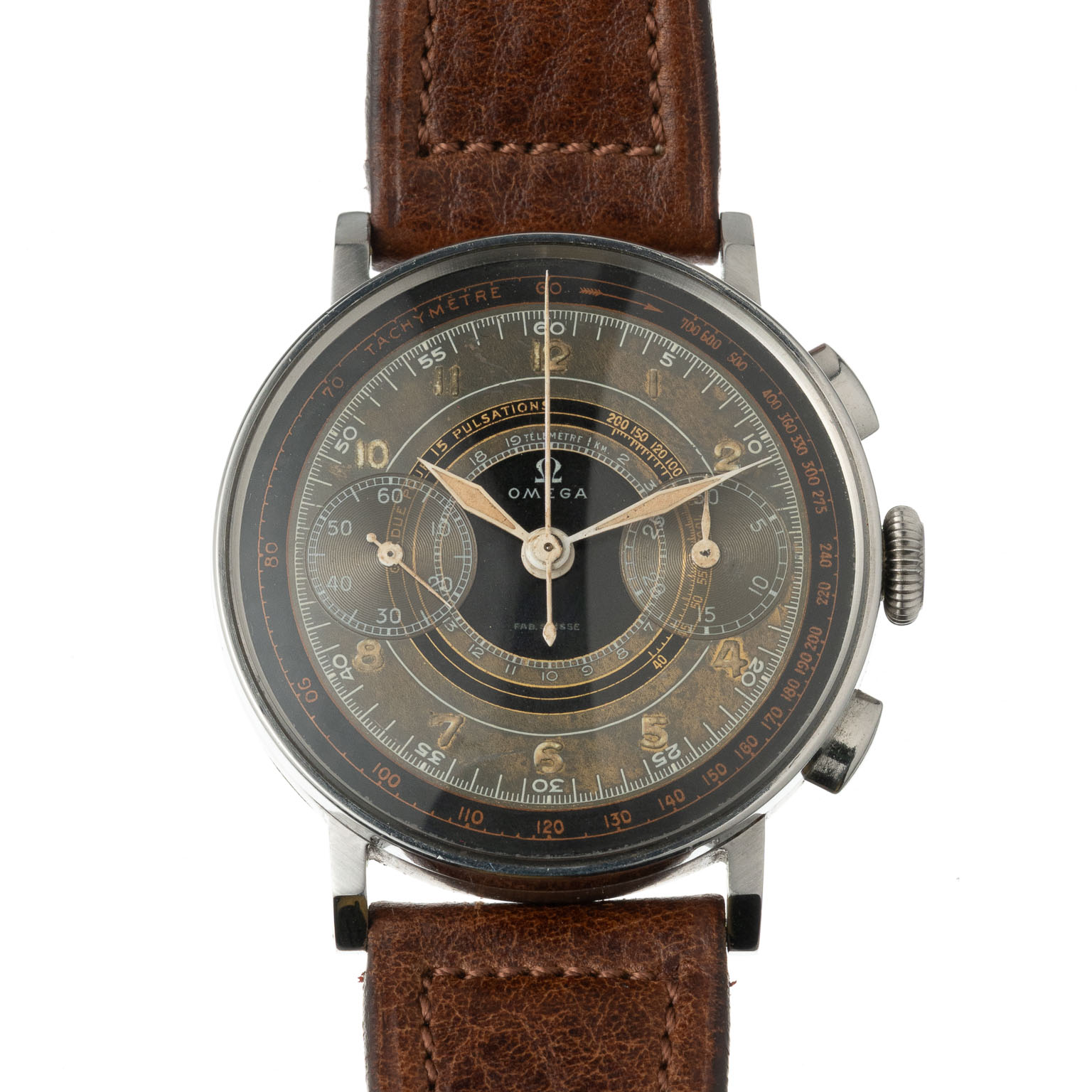
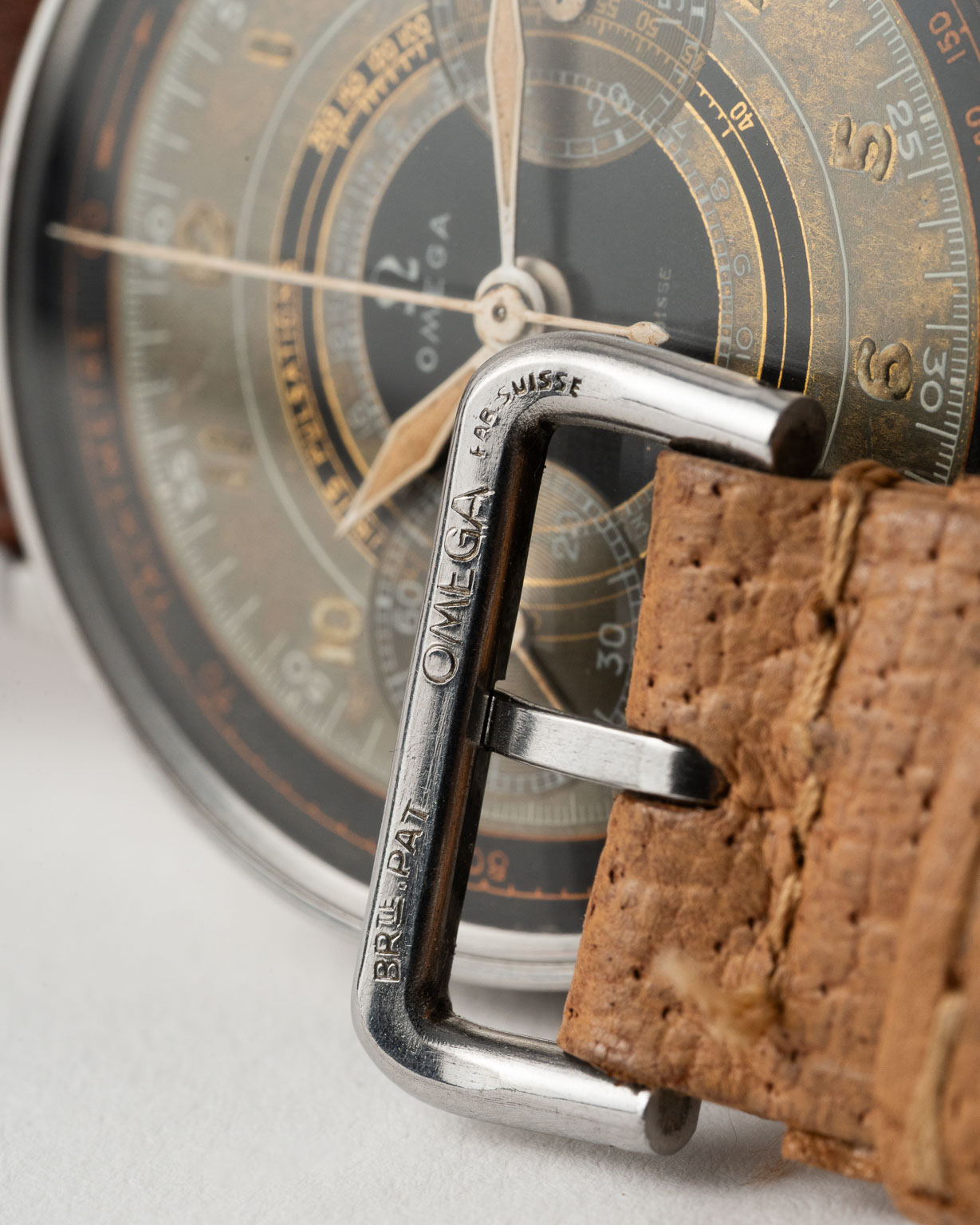
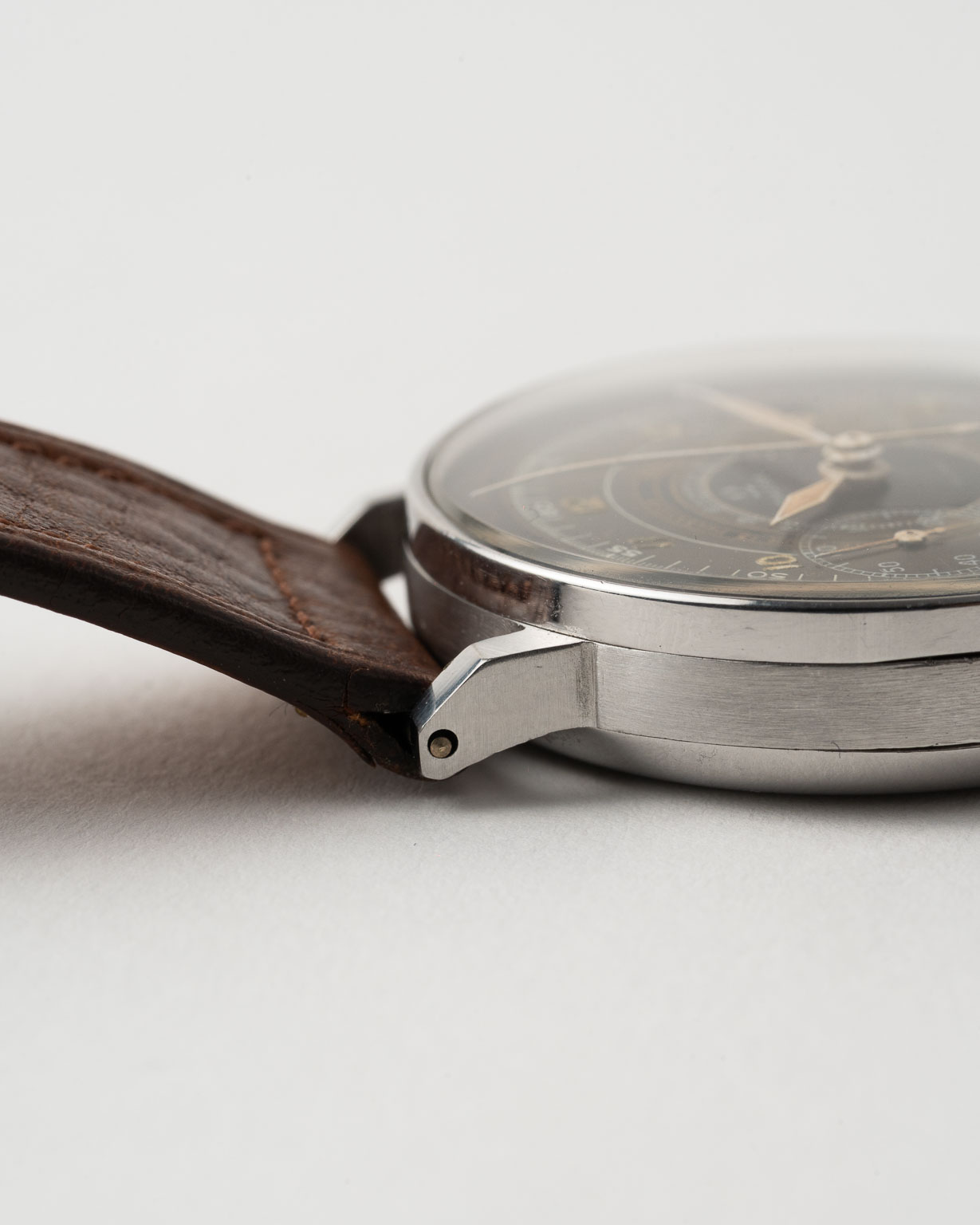
What sets this example apart is the combination of the oversized (for its era) case and a dial that features multiple scales—a very desirable configuration among vintage‑chronograph connoisseurs. Multiscale dials of this kind underscore the watch’s original intent: measuring both speed (tachymeter) and distance (telemeter) and even pulse. The multiscale layout elevates the dial beyond mere time‑telling to functional instrumentation.
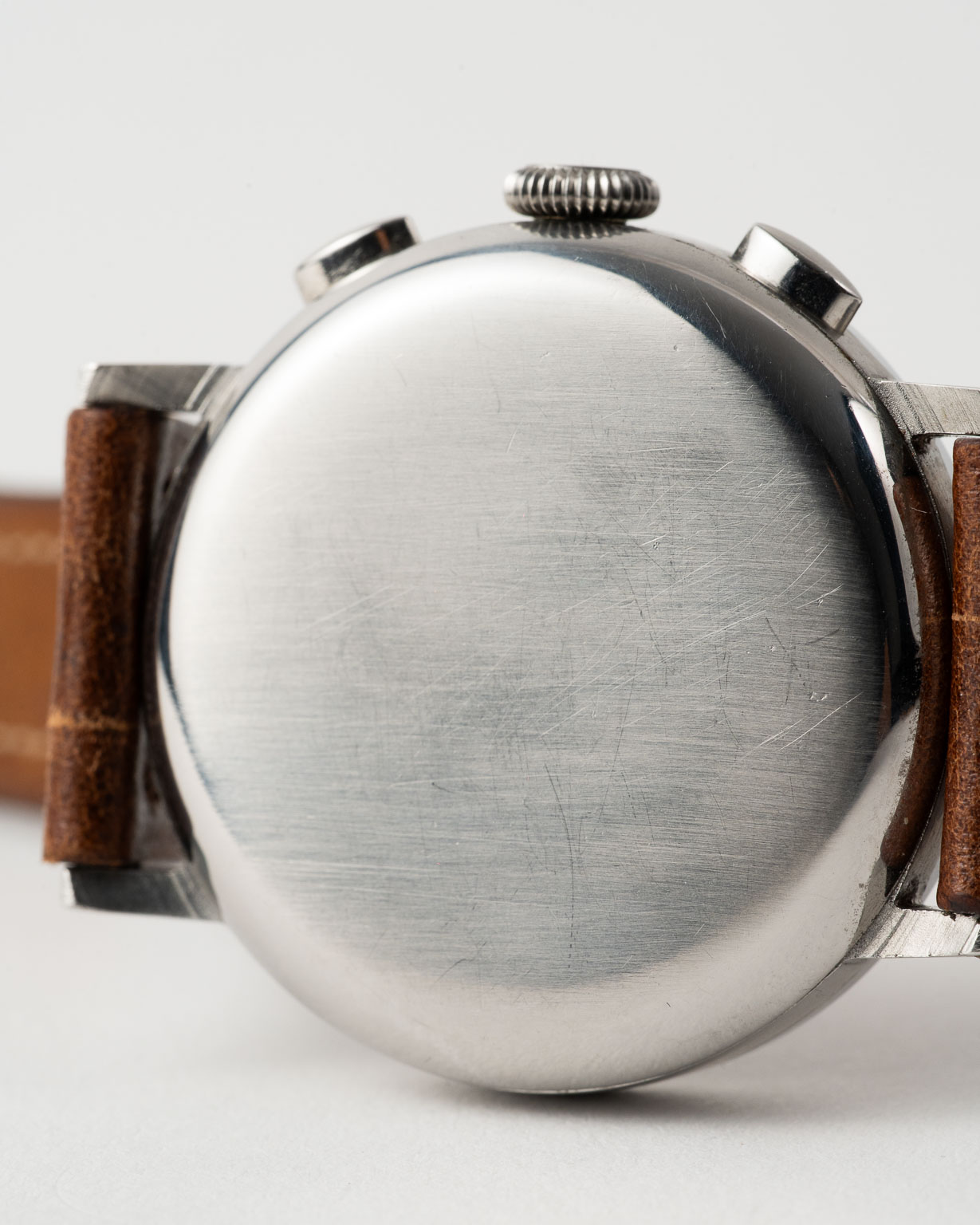
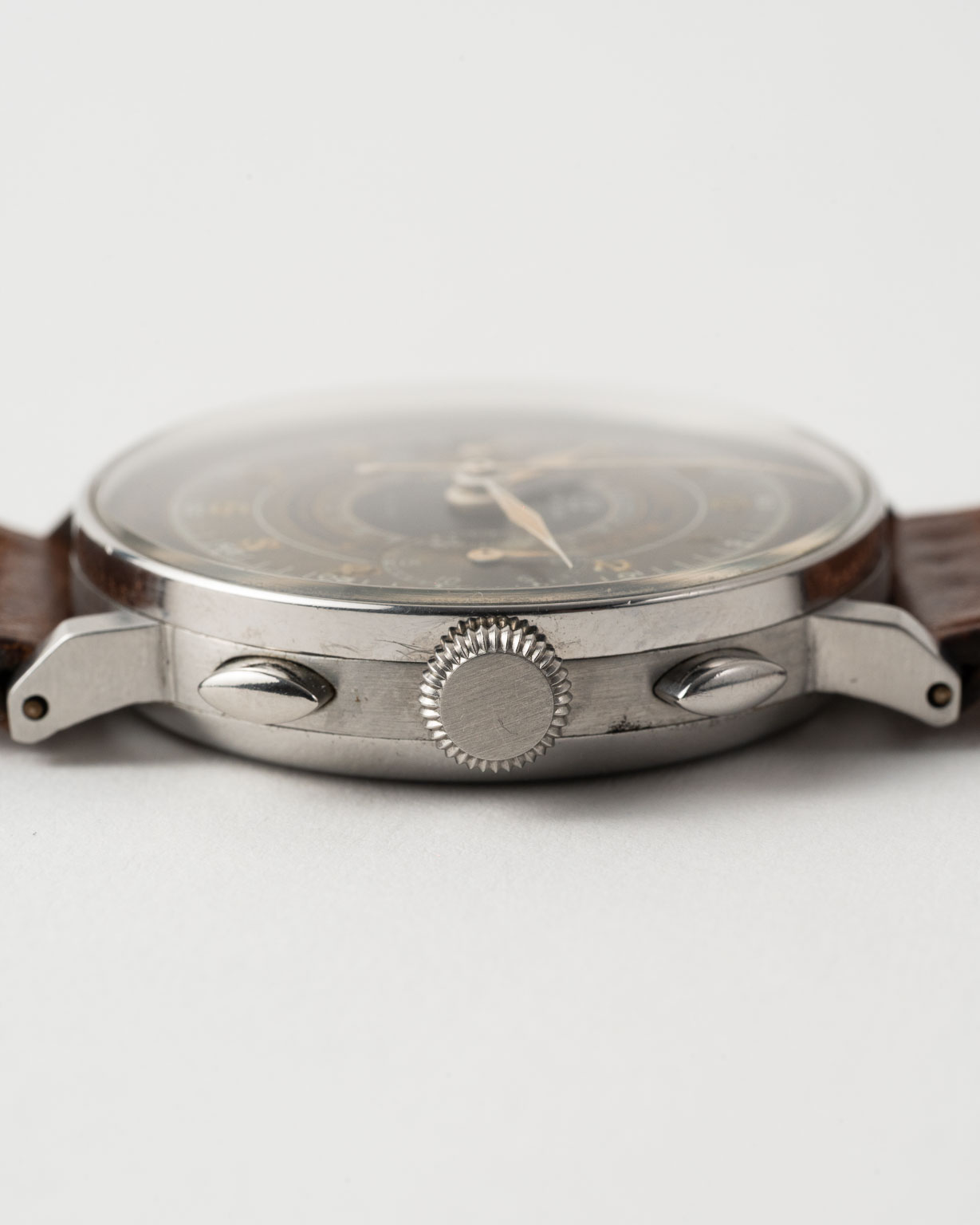
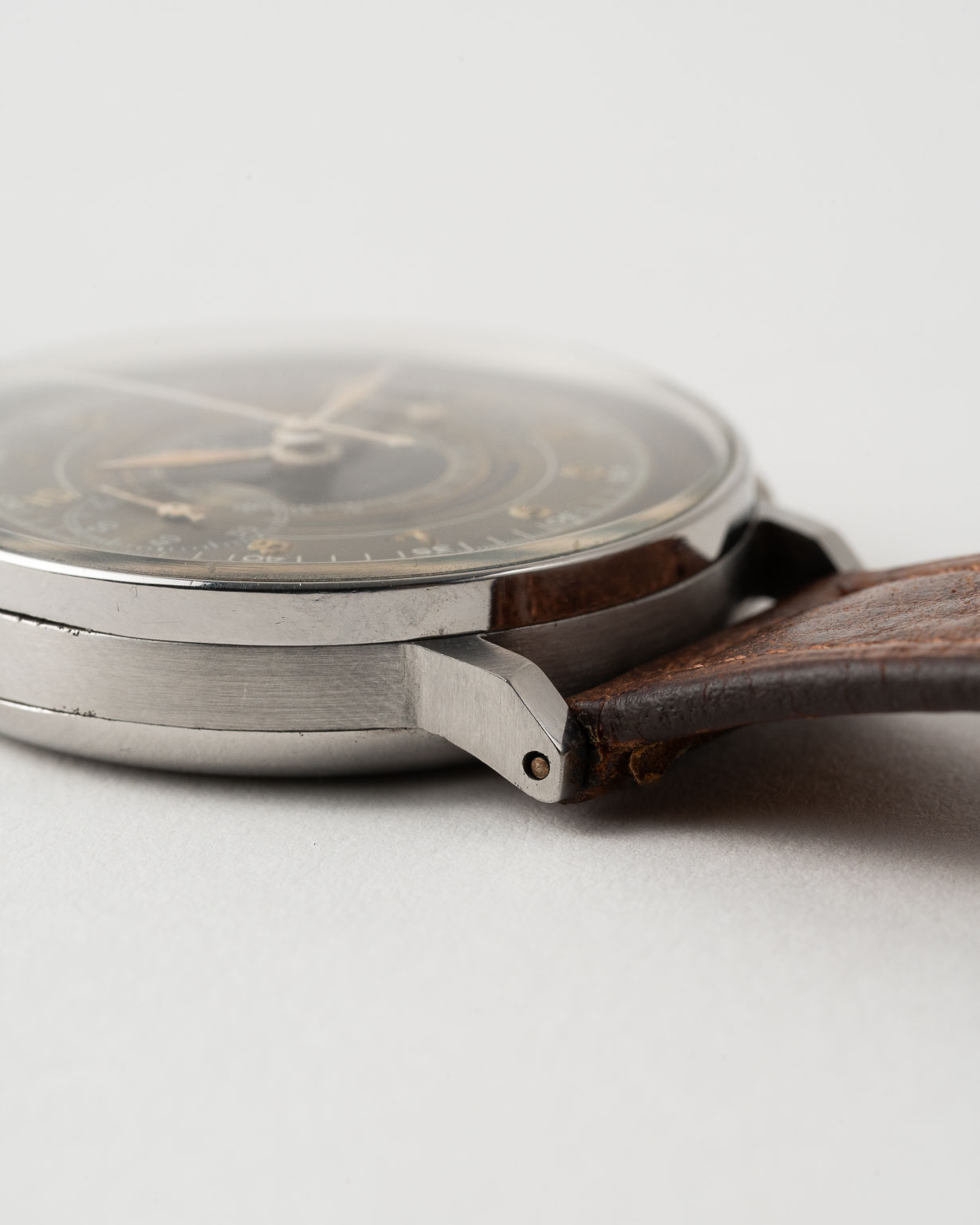
The “Jumbo” aspect refers to how this model presented: a larger diameter, strong wrist presence, straight lugs and bold dial design—all of which make this piece visually compelling today, especially against the backdrop of watches of the 1930s that often measured in the low‑to‑mid 30s mm. As described in reference guides of the 33.3 series, the cases often measured around 37.5 mm which was generous at the time.
Dial & aesthetic narrative
On this model, you’ll find a dial that has aged gracefully: the outer tachymeter scale discreetly printed, the inner pulsations and telemeter ring, radiating in contrasting colours. The patina—a rich even tone—speaks to decades of measured wear and life lived on the wrist. That patina is not a flaw but a hallmark of authenticity and provenance.
The dial architecture with its two‑register layout (small seconds and 30‑minute counter) plays off a clean symmetry around the central hands. References such as the CK987/CK988 line of the 33.3 series commonly featured this layout.
The case, with straight lugs and perhaps olive‑shaped pushers, gives the watch a purposeful yet elegant silhouette.
Why this model matters to collectors
There are several reasons this particular 1939 Jumbo Multiscale example commands attention:
-
Mechanical pedigree: A movement derived from Lemania’s revered CH15/CHRO architecture, the calibre 33.3 was a milestone in Omega’s chronograph development and a direct ancestor of later iconic chronographs.
-
Rarity and size: Producing only some 13 700 movements over two decades, and in larger case sizes for the era, these watches were not common. The “Jumbo” diameter adds visual rarity.
-
Functional dial design: Multiscale dials are seldom seen in today’s market, especially in well‑preserved condition. The tachymeter/telemeter configuration adds depth, not just decoration.
-
Visual presence: The aged dial, distinctive case proportions, and the strong patina combine for a look that works both on wrist and in display—the piece speaks of history and usage, not mere preservation.
What we love:
- Oversized 37mm case
- Beautiful condition
- Important chronograph
What you should know:
- Unless otherwise stated, it is common for vintage watches to not come with box and papers. In the rare example that a watch does come with box and papers it will be mentioned in the description. All purchases come with a bespoke black wooden watch box and warranty card.